Pular para as informações do produto
1 de 12

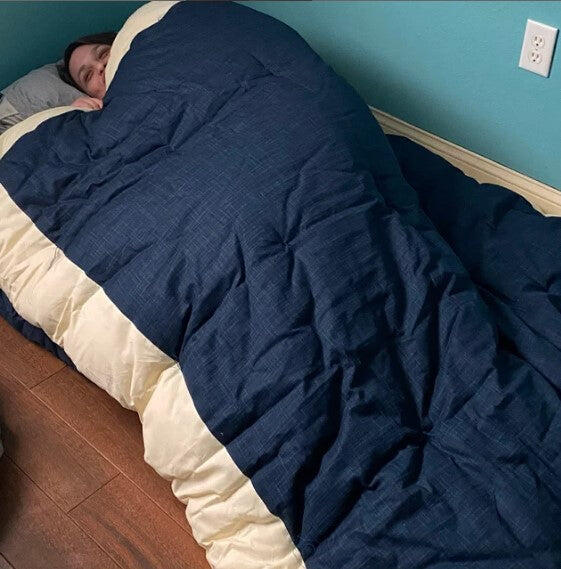
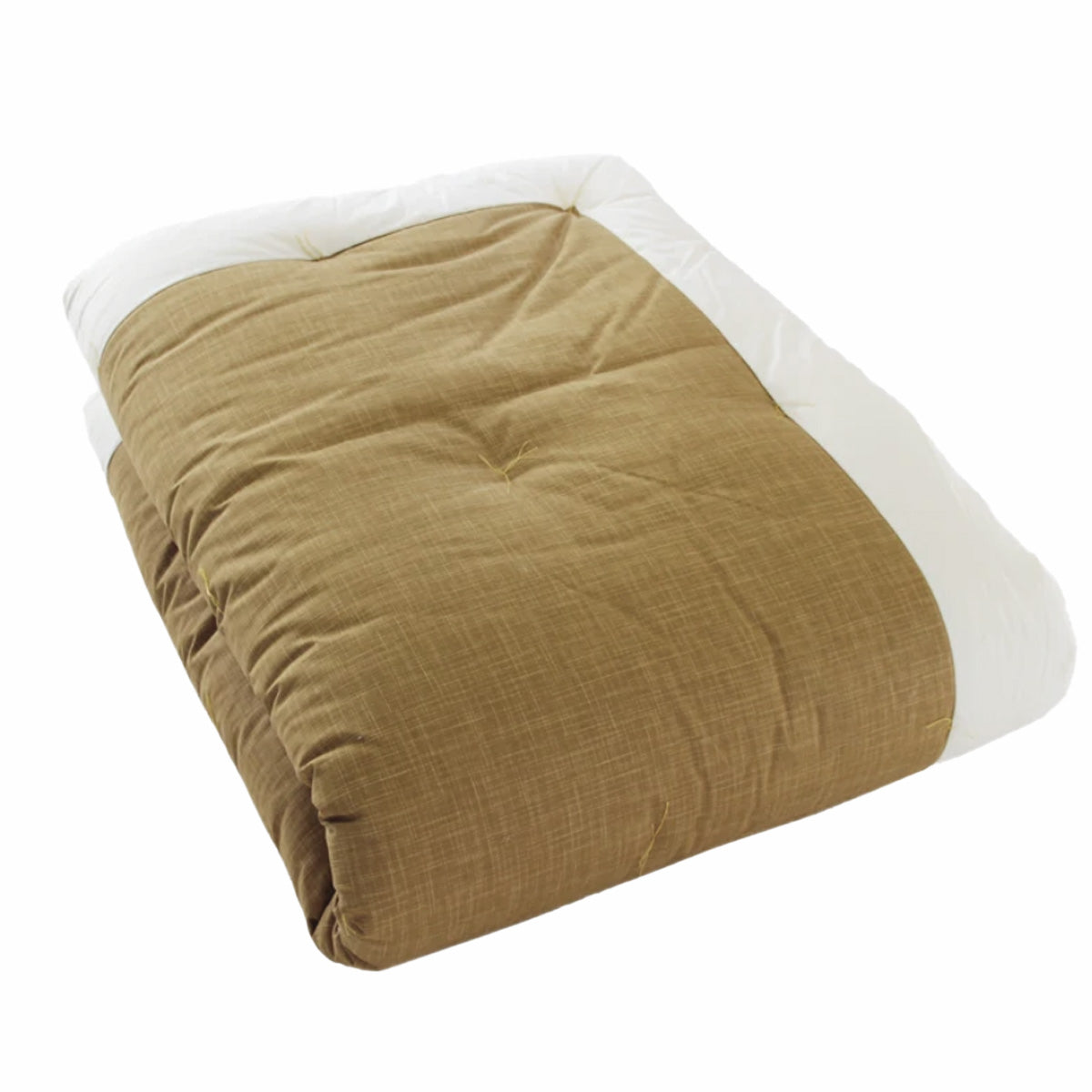
Colcha Japonesa de Futon, Artesanal (Tecido: Algodão Nagomi Azul-Marinho, Recheio: Algodão Orgânico 100%)

Colcha Japonesa de Futon, Artesanal (Tecido: Algodão Nagomi Azul-Marinho, Recheio: Algodão Orgânico 100%)

tamanho
Nagomi Fabric Color
Single – Standard (Heavy)
Fabric size: 200 × 150 cm (78.7 × 59.1 in)
Cotton Filling Weight: 3.6 kg (7.9 lb)
Preço normal $327.00 USD
Preço normal Preço promocional $327.00 USD
Promoção Esgotado
Quantidade

Ver informações completas

Made to Order | Current production time: about 3 weeks

Each futon is made after your order is confirmed.
Production time may vary depending on the season.

Features 

  • Handcrafted in Tokyo, Japan
  • Carefully hand-filled with layers of organic cotton
  • Fabric : Nagomi Cotton (Center) and Egyptian Cotton (Rim)
  • Hand-tufted using traditional Japanese techniques
  • Made without flame retardants, pesticides, or adhesives
  • Designed for floor sleeping, tatami mats, and low platform beds


Hand-Stitched Finish

Carefully sewn closed by hand after the cotton is layered.

Hand-Tufting

Temporarily holds the cotton in place while it settles naturally.

Corner Tie

Helps hold the cotton in place near the corners.


The Queen size of this item does not have a beige border.

Single to Double sizes with beige border

Single to Double sizes

Queen size without beige border

Queen size


Futon Quilt Filling & Warmth

Comparison of Hadakake, Aigake, and Standard Futon Quilts

Hadakake (Lightweight)

Uses the least cotton filling of the three, giving it a lighter, thinner feel.
Suited to warmer weather or those who prefer less weight.

Aigake (Medium-Weight)

Uses a medium amount of cotton filling, between Hadakake and Standard (Heavy).
A balanced option for milder seasons or layering.

You are viewing

Standard (Heavy)

Uses the most cotton filling of the three, giving it greater volume and weight.
The warmest option, suited to colder rooms or those who prefer a fuller feel.

These are general guidelines. The best choice depends on room temperature, climate, other bedding, and personal preference.

Nagomi Fabric

Nagomi Navy

Nagomi is a woven fabric with a subtle, slightly irregular texture inspired by traditional Japanese textiles.

It is slightly thicker and more substantial than many of our patterned fabrics, giving it a durable, comfortable feel.

Nagomi is used across many of our cotton-filled products, making it easy to coordinate Futon Mattresses, Futon Quilts, Zabuton, pillows, and other items in the same fabric.

Filling

The filling is 100% GOTS-certified organic cotton.

For larger sizes, such as Queen, our craftspeople carefully layer as many as 30 sheets of cotton by hand, gradually shaping the futon as they work.

We use cotton with a firm, supportive fiber that works well for Japanese futons. The futon feels soft at first, then gradually becomes denser and more supportive with use.

No wool, polyester, flame retardants, pesticides, or adhesives are used in the filling.

Learn more about our GOTS-certified organic cotton.

Size Information

Please check the listed measurements carefully before ordering.
Size names such as “Single” or “Double” can vary by country.

In general, we recommend matching the size name of your Futon Quilt (Kakefuton) to your Futon Mattress (Shikifuton). For example, a Single Futon Quilt is typically used with a Single Futon Mattress.

Futon Quilts are made wider than the sleeping surface so that they can comfortably cover the body and sides while you sleep.

Actual dimensions may vary slightly because each Futon Quilt (Kakefuton) is filled and finished by hand.

These measurements refer to the fabric size. Once the cotton filling is added, the Futon Quilt gains volume and may appear slightly smaller in its finished form.

Package Size & Weight

Approximate package sizes and weights.

Actual package dimensions and weight may vary slightly because each item is packed by hand. Small items, such as covers, are usually packed together with the main product. Pillows may also be included in the same package depending on the order.

Futon Quilt

LengthWidthHeightWeight
Single73 cm67 cm34 cm5.2 kg
Long73 cm67 cm39 cm5.5 kg
Super Long73 cm67 cm40 cm5.8 kg
Semi Double79 cm67 cm40 cm5.7 kg
Double79 cm67 cm42 cm6.0 kg
Queen79 cm67 cm42 cm7.5 kg

Care Instructions

  • After sleeping, fold back or stand up your futon to let the underside air out. This helps prevent moisture from building up underneath.
  • We recommend using a futon cover to keep your futon clean.
  • Air out your futon regularly to prevent moisture buildup. When possible, dry it in direct sunlight for about 2 hours on each side.
  • If outdoor airing is difficult, place the futon in a well-ventilated room so air can circulate around it.
  • Do not wash with water.
  • For long-term storage, keep it in a dry place, preferably on an upper closet shelf or raised area.

    Please note: If the fabric gets stained, wipe gently with a damp cloth. Avoid beating the futon or jumping on it, as this may damage the cotton filling.

How It’s Made

Each shikibuton is made by the craftspeople in our Tokyo workshop.

From preparing the cotton to layering, shaping, stitching, and tufting, every step is done carefully so the cotton can settle naturally over time.

Watch the video to see the full process from start to finish.

Kakefuton (Quilt) FAQ

  1. What is a Futon Quilt (Kakefuton)?
    A Futon Quilt (Kakefuton) is a traditional Japanese quilt used as the top layer for sleeping. It is placed over the body in the same way as a comforter or duvet.

  2. How is a Futon Quilt (Kakefuton) different from a Western comforter or duvet?
    A traditional Futon Quilt (Kakefuton) is filled with cotton rather than down or synthetic fibers. Cotton gives it a comfortable weight and a different feel from a lightweight down duvet.

  3. How are Standard (Heavy), Aigake (Medium-Weight), and Hadakake (Lightweight) Futon Quilts used through the seasons?
    The main difference is the amount of cotton filling, which affects both weight and warmth. As a rough guide in Tokyo, Standard (Heavy) is often used in winter, when average outdoor temperatures are around 5-8°C (41-46°F). Aigake is commonly used in spring and autumn, roughly around 10-20°C (50-68°F), while Hadakake is the lightest option and is often used during warmer months, when temperatures are generally above 20°C (68°F).

    From our experience, in hot tropical climates such as Singapore, a Hadakake may be sufficient for much of the year. In colder regions where winters bring snow, a Standard (Heavy) Futon Quilt may be used together with a blanket or other bedding.

    These are only general guidelines. The most suitable choice depends on room temperature, heating or air conditioning, other bedding, and personal preference.

  4. Will a cotton Futon Quilt become thinner over time?
    Yes. Cotton gradually settles and compresses with use. This is a natural characteristic of cotton bedding and does not mean the Futon Quilt is defective.

  5. Does a new Futon Quilt feel especially fluffy?
    Yes. A new cotton Futon Quilt can be quite full and fluffy at first. It will gradually settle into a more compact shape with use.

  6. How should I choose the right size?
    Please check the listed measurements carefully before ordering. Size names such as “Single” or “Double” can vary by country.

  7. Are the listed dimensions the finished size?
    The listed measurements refer to the fabric size. Once the cotton filling is added, the Futon Quilt gains volume and may appear slightly smaller in its finished form.

  8. Should I use a Quilt Cover?
    Yes. We recommend using a Quilt Cover to protect your Futon Quilt from sweat, skin oils, and everyday dirt. The cover can be removed and washed more easily than the Futon Quilt itself.

  9. How often should I air out my Futon Quilt?
    We recommend airing it regularly, especially in humid conditions. Airing helps release moisture absorbed during sleep.

  10. Can I air my Futon Quilt outside?
    Yes. When possible, air it in a dry, well-ventilated place. Avoid leaving it outside in damp or humid weather.

  11. What if I cannot air it outside?
    Place or hang the Futon Quilt in a well-ventilated room and allow air to circulate around it. A fan or dehumidifier can also help in humid conditions.

  12. Can I wash the Futon Quilt (Kakefuton)?
    No. Please do not wash the Futon Quilt with water at home. If the outer fabric becomes lightly stained, gently wipe the affected area with a damp cloth.

  13. How should I store my Futon Quilt for a long time?
    Make sure the Futon Quilt is completely dry before storage. Keep it in a dry, well-ventilated place and avoid areas where moisture can collect.

  14. Are flame retardants or adhesives used?
    No wool, polyester, flame retardants, insecticides, adhesives, or other residual chemical treatments are added to the cotton filling.

  • 5 stars: 1 (100%)
  • 4 stars: 0 (0%)
  • 3 stars: 0 (0%)
  • 2 stars: 0 (0%)
  • 1 star: 0 (0%)
E
E from the U.S.
No title

Wonderful quality and feel. It's just the size I needed for my tiny room. Will be buying again in the future.