Pular para as informações do produto
1 de 12

Travesseiro Japonês de Trigo Sarraceno, Travesseiro de Casca de Sarraceno, Altura Ajustável, Tecido Orgânico NC

Travesseiro Japonês de Trigo Sarraceno, Travesseiro de Casca de Sarraceno, Altura Ajustável, Tecido Orgânico NC

Preço normal $83.00 USD
Preço normal Preço promocional $83.00 USD
Promoção Esgotado
tamanho de um travesseiro
Quantidade

Ver informações completas

Pequeno: 35cm x 50cm
Peso da casca de trigo sarraceno: 1,5kg

Grande: 43cm x 63cm
Peso da casca de trigo sarraceno: 2,5kg

Tecido: 100% algodão orgânico
Preenchimento: 100% cascas de trigo sarraceno japonês (colhidas e processadas no Japão)

*Use fronha tipo envelope ou capas de tecido elástico para travesseiros de casca de trigo sarraceno, em vez de fronhas com fecho. Como os travesseiros de casca de trigo sarraceno são preenchidos até a borda, é muito apertado colocá-los em uma capa com fecho que tenha uma abertura estreita.

Characteristics of buckwheat hulls

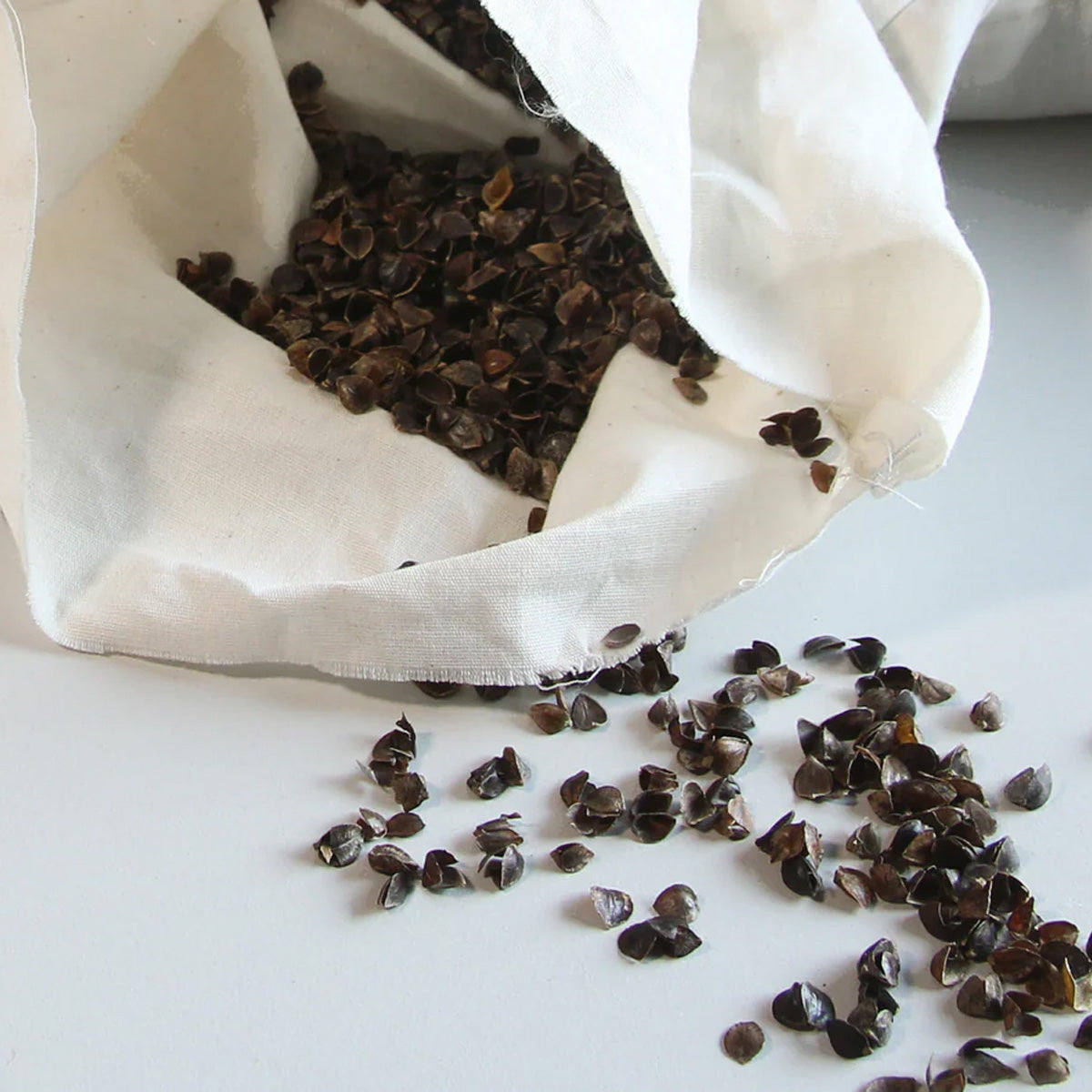
The “three-sided” buckwheat hulls are mostly used. They create space between them for better air flow.
Thanks to its structure, it uses less buckwheat hulls but has more bulk and is as a result lighter.

Chemical FreeFinely selected Japanese grown buckwheat hulls are heated in a kiln at about 100 ºC (212ºF) and microwave irradiation is used to kill insects and eggs attached to the buckwheat hulls. This process is good for our health and the environment because it kills insects, dehumidifies, and dries buckwheat hulls without the use of chemicals.

History of buckwheat pillows

Natural "buckwheat hulls" have long been a common material for pillows in Japan.
Generally, buckwheat hulls are what remains after buckwheat is harvested and dried in the sun for several days to remove the fruit. Because buckwheat hulls are a natural material, they absorb and dissipate moisture and are cool in the summer, making them popular among those familiar with their use.

As soba became popular in Japan during the Edo period (1603-1867), people began to recycle and utilize the hulls, a byproduct of grinding the buckwheat into flour. This may have been the result of the wisdom and ingenuity of Edo society, where life as a whole was based on recycling

Buckwheat Pillow Care Instructions

cover  filled with buck wheat hulls

Air the pillow regularly in the sun to keep the buckwheat hulls dry.

Avoid high humidity and store it in a well-ventilated place.

If a small amount of buckwheat powder comes out, remove it gently.

Precautions for use

1. When use, powder come out
Dried buckwheat hulls will crack if placed under a heavy load. Please understand that this is characteristic of a buckwheat pillow.

Since buckwheat hulls are natural plant hulls (from buckwheat seeds), they will lose their height and volume if they are rubbed or crushed while being used. In addition, in rare cases crushed buckwheat hulls may come out of the zipper. If you are concerned about this, please take out all the buckwheat hulls, sift them through a sieve, and put only the intact hulls back into the pillow.

2. Storage and handling
When storing a buckwheat pillow, avoid high temperatures and humidity and keep it in a well-ventilated place.

If stored in a humid or poorly ventilated place, buckwheat hulls are more likely to attract mites and other common household insects. After use, dry the pillow regularly in the sun to keep it moisture-free. It is not eligible for return if it becomes infested with insects after use.

3. Allergic reactions
Some people are allergic to buckwheat. Please stop using the pillow if you have a physical reaction during use.